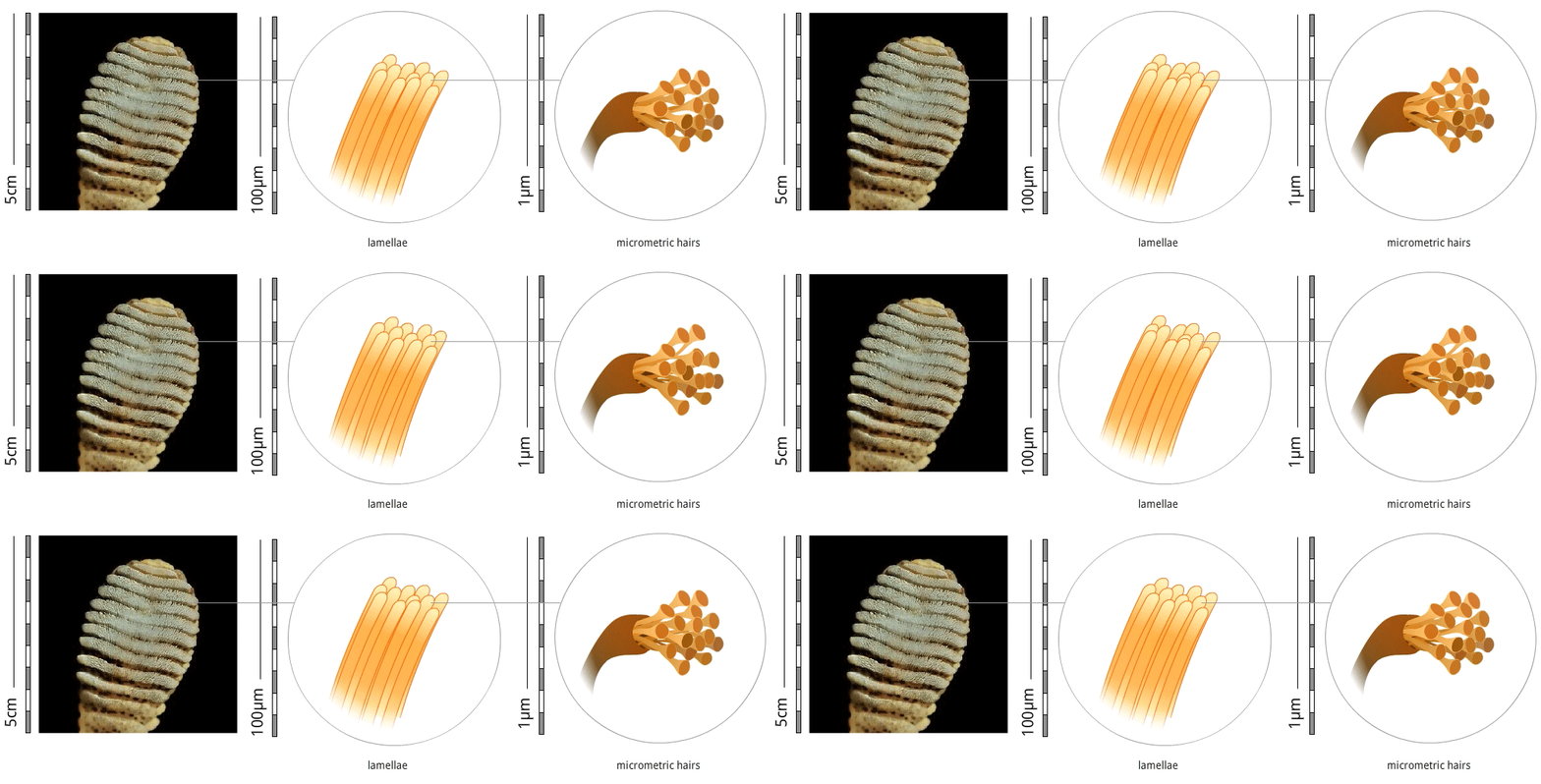
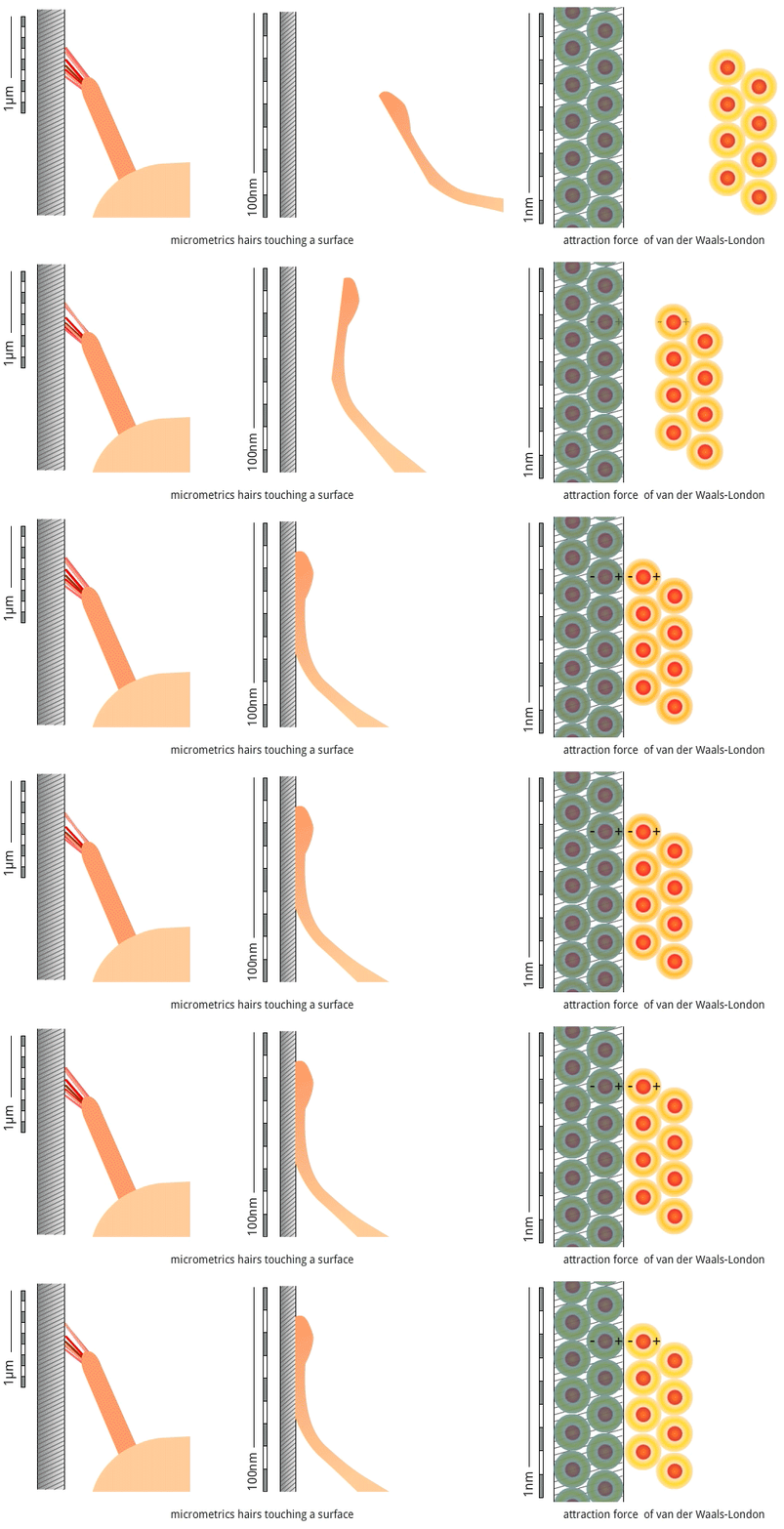
The use of vegetable or animal based glues to join two interfaces goes back to prehistory. In ancient Greece, the adhesion phenomenon of lizards that can stick and walk quickly on walls and ceilings, attracted the attention of Aristotle. The physical phenomenon behind the enormous sticking capability of of lizard feet could only be explained with the help of Electronic Microscopes: the sole of the foot is covered with micrometric hairs the stick to the surfaces through nondirectional van der Waals-London bonds (Figure 2.3.11)

If no contaminant is present, compatible materials stick to each other. Compatible materials are those that together form composites or solid solutions. The classic example is mica, which when cleaved in a vacuum adhere together almost as tightly as before cleavage. Another example of adhesion between compatible materials are grains of polycrystalline material. The adhesion between each grain is due to the geometry (in three dimensions of each grain) with each grain fitting into the other and the adhesion between the grain surfaces (grain boundaries).
Solids with flat interfaces, in the air, usually don’t adhere with themselves, for various reasons: 1- the surfaces are covered with contaminants that limit contact; 2- even flat surfaces are rugged on a nanometric scale which limits contact; 3- junctions that are formed when two metallic surfaces are pressed together are broken when the pressure ceases due to the elastic response} of the metals. Soft and deformable metals like indium (In) adhere to other clean surfaced metals because the indium “spreads” onto the other metal creating a large contact area. There are no junction ruptures because the elastic tension is dissipated by the deformation of the indium. Cold junctions between ductile metals, like gold (Au) in gold or aluminum (Al) in aluminum, happen when the plastic deformation is sufficient to destroy oxidized films or adsorbed gases in contact with the original surface.