The theories of Nucleation and Growth of Thermodynamic Phases, Diffusion or Atomic Mobility and Surface Tension become intelligible phenomenon in biological systems, which, up until recently, were completely ignored.
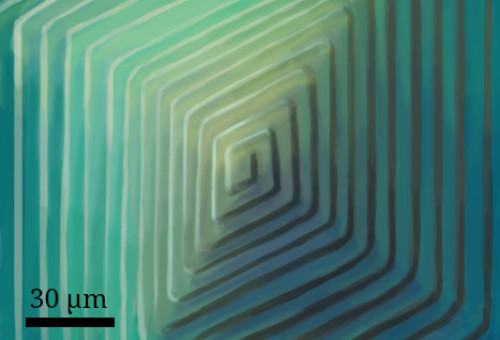
They also clear up are some fundamental questions, “answered” by natural selection during the long evolutionary process. Analysis of biomineralization processes that include classic nucleation theory and growth phase directly connect with Darwin’s theory of natural selection by observing that biomineralization processes are defined by the physicochemical conditions of the environment. As noted by Adolph Fick, creator of the theory of diffusion in the nineteenth century, “A vital phenomenon can only be regarded as explained if it has been proven that it appears as the result of the material components of living organisms interacting according to the laws which those same components follow in their interactions outside of living systems.” This theoretical position is supported as well via the observation that classic growth phase laws can be applied as well to prismatic grain growth of calcite phase in mollusk shells. Only a minimum of biological control would be utilized to produce well organized calcite prismatic structures.
The gaseous exchanges inherent to the various respiratory mechanisms, fluid circulation and tissue permeability, the formation of hard structures (like bones, shells and carapaces) are all known examples of the phenomenon inherent to the huge variety of life on Earth, directly related to the mechanical-electrical-thermal-optics behavior of biological materials of which they are made. By classic nomenclature of material science, biological material could be classified as highly hierarchized jellified composites.