The mechanics of movement of atoms in solids is not as well known as within fluids. The basic step in the process of diffusion is an atom in a certain position in a lattice is transferred in some way to an adjacent position. Under these conditions the atoms settle in their positions of lower energy levels between neighboring atoms.
The energy curve that describes the relationship between energy potential and the interatomic spacing for solids is shown in Figure 2.2.10 (below): a pool of potential energy is formed and the interatomic spacing at equilibrium at a temperature of 0 K, r0, corresponds to the lowest point in the potential energy pool. At higher temperatures, the greater energy permits the vibration of atoms in the dominion of large and small interatomic distances. The heating to successively higher temperatures (T1, T2, T3, etc.) increases the vibration energy of E1, E2, E3 and so forth. The average vibrational amplitude of an atom corresponds to the vacancy pool of potential energy at each temperature, and the average interatomic distance is represented by the intermediary position, that increases as a function of the temperature of r1, r2, r3 and so forth (Figure 2.2.10). Above 0 K, the atoms vibrate around their equilibrium positions in the lattice and change switch positions amongst themselves. Metals with CFC and HC structures, close to their melting point, vibrate at a frequency around 1013 to 1014 s-1and we can estimate that each atom changes position 100 million times per second. So, in a crystalline lattice the change of position of an atom is a frequent phenomenon.
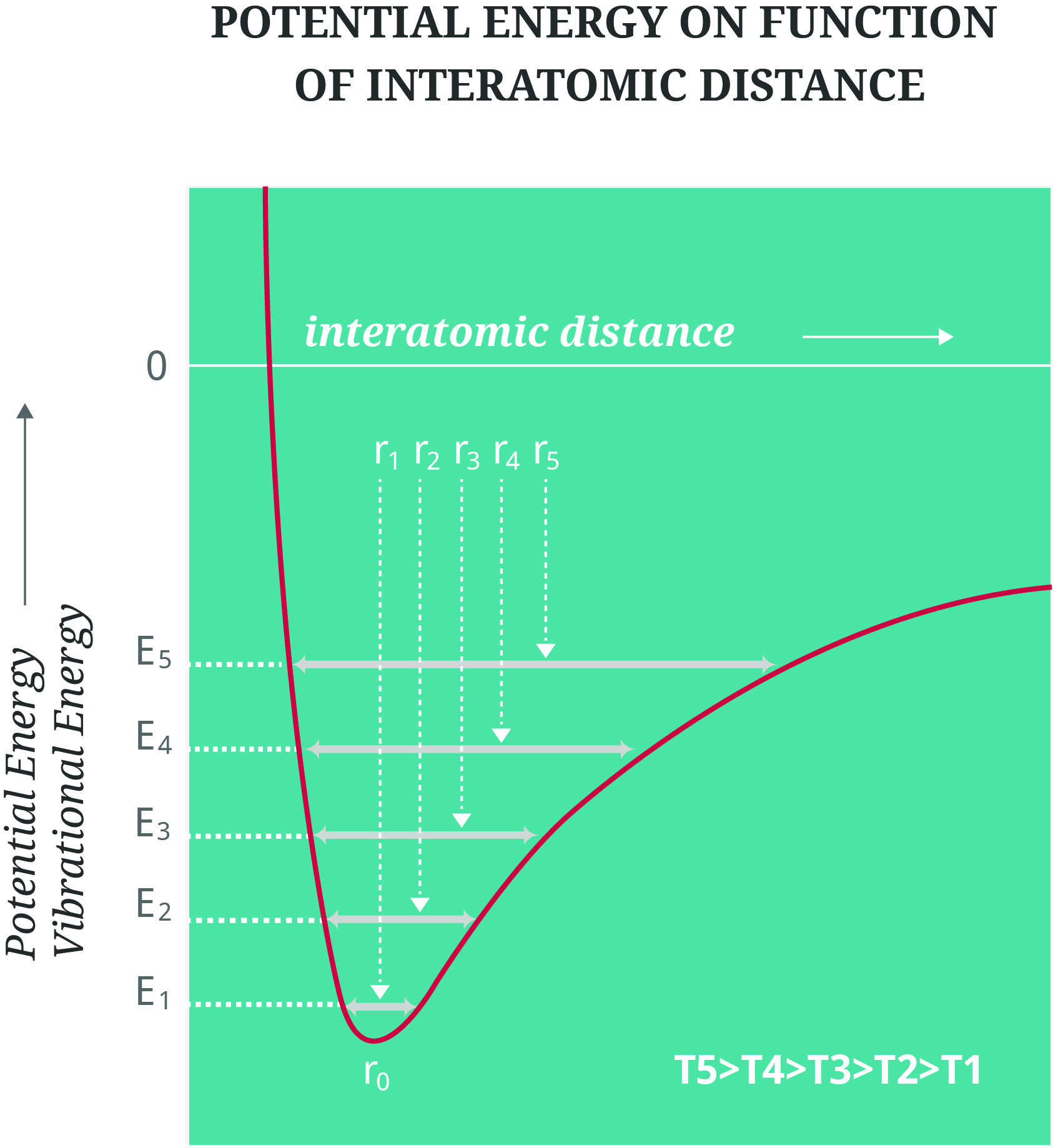
Figure 2.2.11 (below) shows an atom moving to a neighboring position in the network and occupying a vacancy. The diffusion of atoms in a given direction corresponds to the movement of vacancies in the opposite direction. This is called Vacancy Diffusion. Also in this figure an atom occupies a position that is not part of the lattice and becomes an interstitial atom, which moves freely. This is interstitial diffusion. In Figure 2.2.11 the atoms in a ring move simultaneously to adjacent positions in the network. This is the ring mechanism. Finally two atoms swap position directly. This is the exchange mechanism. Of all the mechanisms of autodiffusion, the most probable exchange is an exchange involving a vacancy. The direct exchange mechanism is the least likely because of the high energy requirement. The ring mechanism presents a sufficiently low activation energy; but hasn’t occurred in real systems.
The vacancy mechanism, shown in Figure 2.2.11, appears to be the most probable in diffusion of elements and ions that form substitutional solid solutions (or substitutional) in metals, because, if the vacancies are already present, the activation energy for diffusion will be the only energy necessary for an atom to break it’s bonds with its neighbors and move to a vacancy. The interstitial mechanism is important in the case of a solute atom that is sufficiently small (the atom moves faster with this mechanism). This happens especially when carbon (C), nitrogen (N), oxygen (O) and hydrogen (H) diffuse in metals, and alkali metal ions (Na, Li, etc.) and various gases dissolve in silicate glass and in vitreous materials.

1Close to 0 K, the atoms lose their individuality and form the so called Bose-Einstein condensations, theorised in 1925 by the german physicist Albert Einstein (1879-1955) and by the Indian physicist Satyendra Nath Bose (1894-1974). In 1995, two American physicists (Carl Edwin Wieman and Eric Cornell) produced the first Bose-Einstein condensation at a temperature of 170 nanokelvin.